Posted by Roland
We have been in Mirepoix now for about three weeks. As I write, I’m seated outdoors in the central square, facing the sun, in my shorts and teeshirt. The church bell just rang three o’clock and the cafes are full of chatter and music. I will miss Mirepoix when we leave. We’ve enjoyed it – it’s perhaps the prettiest, most interesting village in the Ariege.
Today we took a short hike around a ruin just a few kilometers away that is called the Chateau de Lagarde. The locals called the chateau “la garde” because its function was to guard the district from “the enemy”. The identity of “the enemy” changed many times since the first fortifications were built on the site by Ramiro the 1st of Aragon in the 11th Century. Perhaps in the past the locals called the castle by a name other than “The Guard”, such as “Ramiro’s Place” or “Castle Belonging to the Bastard Son of Sancho III of Navarre by his mistress, Sancha de Aybar”.
In any case, the name that stuck was “The Guard” even though the chateau went through many owners and functions. When I read the historic placard saying Lagarde Castle was renovated in the 13th Century I thought I’d come across an improper translation to English, so I double-checked—which led me to the information about said Ramiro.
By renovating, a new owner avoided the need to start from scratch. The French countryside is full of fix-er-uppers. Energetic people were no different then than they are now—looking for a fun project enabling them to turn their home into a castle.
In the olden days not everything required a proper name. We walked down a street in the old village beneath the castle called “La Grande Rue” (the big road), which led to a road up to the castle named “Rue au Chateau” (road to the castle). When all the signs are so easy to understand, it’s like having a free French lesson. I expected to see a sign on the r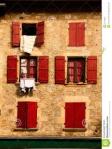 ed-shuttered buildings that said, “Bâtiments aux Volets Rouges” (red-shuttered buildings). The boules court had a sign on it that said “Boules Court” in French.
The enemy of the predominantly Catholic populace around the time of the castle’s 13th Century make-over were the Cathars, whose breakaway religion was known as “the church of Satan” by the Catholics. Cathars challenged the concept of Christ’s divinity and a few other things such as monotheism and the incorruptibility of priests. Cathars believed, for example, that marriage was no different than prostitution…which could be considered a valid stance even today if you observe the succession of women married to Donald Trump.
At any rate, the castle had belonged to Cathars, so it was mostly destroyed and then gifted to the Levis-Mirepoix family. It has remained in the possession of that fine family until just recently when one of the last in their line, Joey “Ramon” Levis-Mirepoix, lost it in a gambling debt over who could drink the most in a single night.
[[Side Note: The House of Lévis or Lévis-Mirepoix is a French noble family. Notable members of the family include: • Philippe de Levis (1435 – 1475), French Roman Catholic bishop and cardinal • Louis Charles de Lévis (1647 – 18 September 1717), nobleman • Anne-Claude de Lévis (31 October 1692 – 5 September 1765), French antiquarian • Gaston Pierre de Lévis (1699 – 1757), Marshal of France • François Gaston de Lévis (20 August 1719 – 20 November 1787), Marshal of France • Pierre-Marc-Gaston de Lévis (7 March 1764 – 15 February 1830), politician, and aphorist • Strauss Levi – (1830 – 1875), bastard blue-jean inventor and womanizing reprobate • Antoine de Lévis-Mirepoix (1 August 1884 – 16 July 1981), historian, novelist and essayist]]
The old Lagarde village trail leads to another village called Moulin Neuf, where the new mill (“Moulin Neuf”) was built. Not far from there another village, high on a mountaintop, looks across the Ariege Valley. That village is called Monthaut (“high mountain”).
Indulge me as I think out loud.
Proper names of people were assigned in more or less the same way, which explains why so many surnames mean something specific. Tom the joyner became Tom Joyner. Philippe Legros needed to be differentiated from Philippe Lepetit because there were likely to be several individuals with the same first name anywhere you went. Most first names in Europe were Christian names (sound familiar?) and most progeny were usually given the name of either a parent or grandparent. Since people did not move around very much—actually, they rarely went outside of their villages in the 13th Century—it wouldn’t have been confusing in the least to have someone called, say, Jean Lebattiseur (builder) in many villages.
In every village we’ve visited I’ve spoken with people whose surnames are written on monuments or streets. A visit to the cemetery would reveal many entries from among the same few surnames. I began thinking about all this a bit more while we were in Saint Clar, our tiny town in the Gers. I puzzled over a street named Cantaloupe. I knew that the area produced garlic and walnuts, not cantaloupes. Why would the village take pride in a fruit from another region entirely? I began finding the name carved here and there around town—on a monument to the WWI fallen, at city hall, and in the church for having endowed a pew. Following my logic above, I determined that Cantaloupe was a transplant. I wonder what it was like, all those years ago, to be a Cantaloupe among a bunch of inbred Gimonts, Gramonts and Grimonts. Who really knows for sure? It’s the old world.
Anyway, I’m sure it’s taken centuries for family names to gravitate away from requiring multi-generational job or character descriptions. I’m glad that we no longer need those inflexible appendages, linking our livelihood with our societal function. No more will the son or daughter of Daniel Deskjockey be expected to follow the father into corporate drudgery.
Since I’m not a qualified student of surnames or given names I think I’d better change topics before I climb too far up the ancestral tree, searching for fruit that isn’t there. But wherever your ancestral surname began, just keep in mind that there was sure to be a bastard in there somewhere. Some bastards ended up royalty, like King Richard the Third, William the Conqueror and Queen Elizabeth I, to mention a few. I’m sure a few bastards have even ended up President of the United States, Donald Trump notwithstanding.
Thankfully, the shunned bastard of Aragon left his traces in the Ariege of France, perhaps as proof that there’s a bit of bastard in each of us.
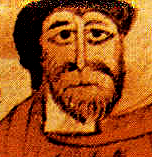
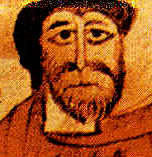
Photo above: The original Ramiro I, who was reincarnated in the 20th Century as author Steven King.



So…. France! Mes Amis! You escaped the smell of cracked brown hills, the siren’s call of pungent pasta sauce at Sunday noon, the bouquet of your childhood. By the banks of the Russian River, many coffees ago, You watched the raptors circle, carving the dry hot sky. Yet, returned again to the harsh asphalt city, with its guilded cage and giddy madness. And then a continent away, the old world is new, someone else’s history, a treasure trove. If you do not like who they say you are you can walk away. Until you see, you say who you are and do not wait for the answer. Because it doesn’t matter.
Sent from my iPhone
>
LikeLiked by 1 person